Why fabricators lose time to a “glazed” blade
Glazed blade = downtime. On dense materials like quartzite, heat builds up in the cut and the diamonds close up (the rim polishes over). When that happens, the tool stops cutting efficiently and problems stack up fast:
- Cut quality drops: wandering cuts, wider kerf, rough edges, burning and chip‑out.
- Stone movement risk: the part can shift on the table, throwing off alignment.
- Machine load spikes: rising amp draw, higher heat, and slower feeds.
- Binding and trips: the blade can seize/bind or trip the machine.
- Workarounds cost time: some shops resort to multiple passes on quartzite because their machine can’t push a glazed blade through.
- Tool tracks out of alignment: the net result is a blade that’s not cutting straight.
If you’ve seen any of the above, you’ve likely got glazing.
Dressing vs “sharpening” — what’s actually happening
People often call it sharpening, but that’s not quite right. The goal is to re‑open the diamonds and true the rim so the blade grinds/mills cleanly again.
- Dressing media: We use 1/8″ limestone as the dressing material.
- Effect: The abrasive re‑exposes diamond and clears the polished binder, restoring bite and straight tracking.
- Result: Lower heat and amp load, cleaner edges, and feeds return to normal.
Plainly: dressing re‑opens the diamonds; it doesn’t “sharpen” in the knife sense.
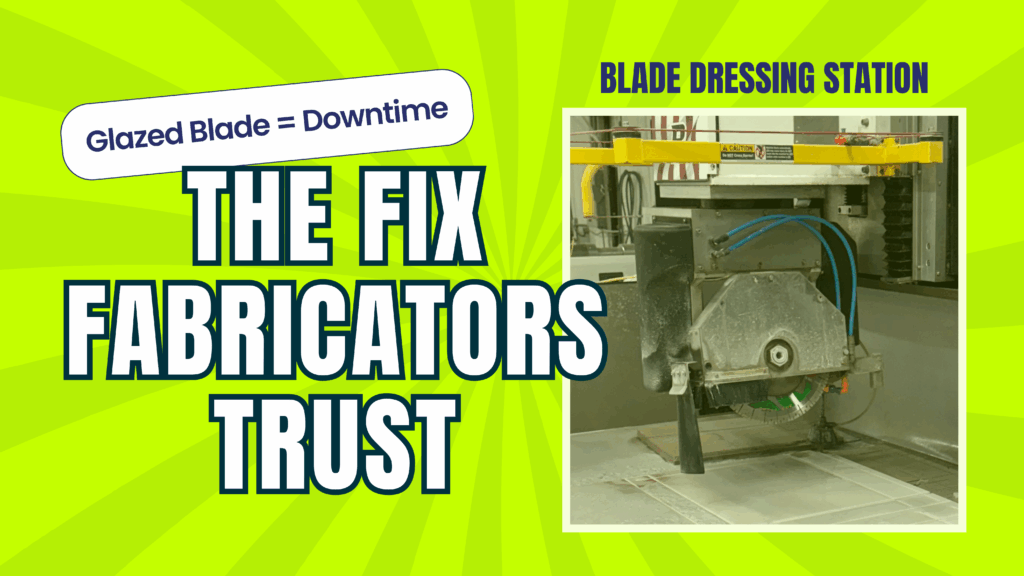
Northwood’s Saw Blade Dressing Station: push‑button, on‑machine
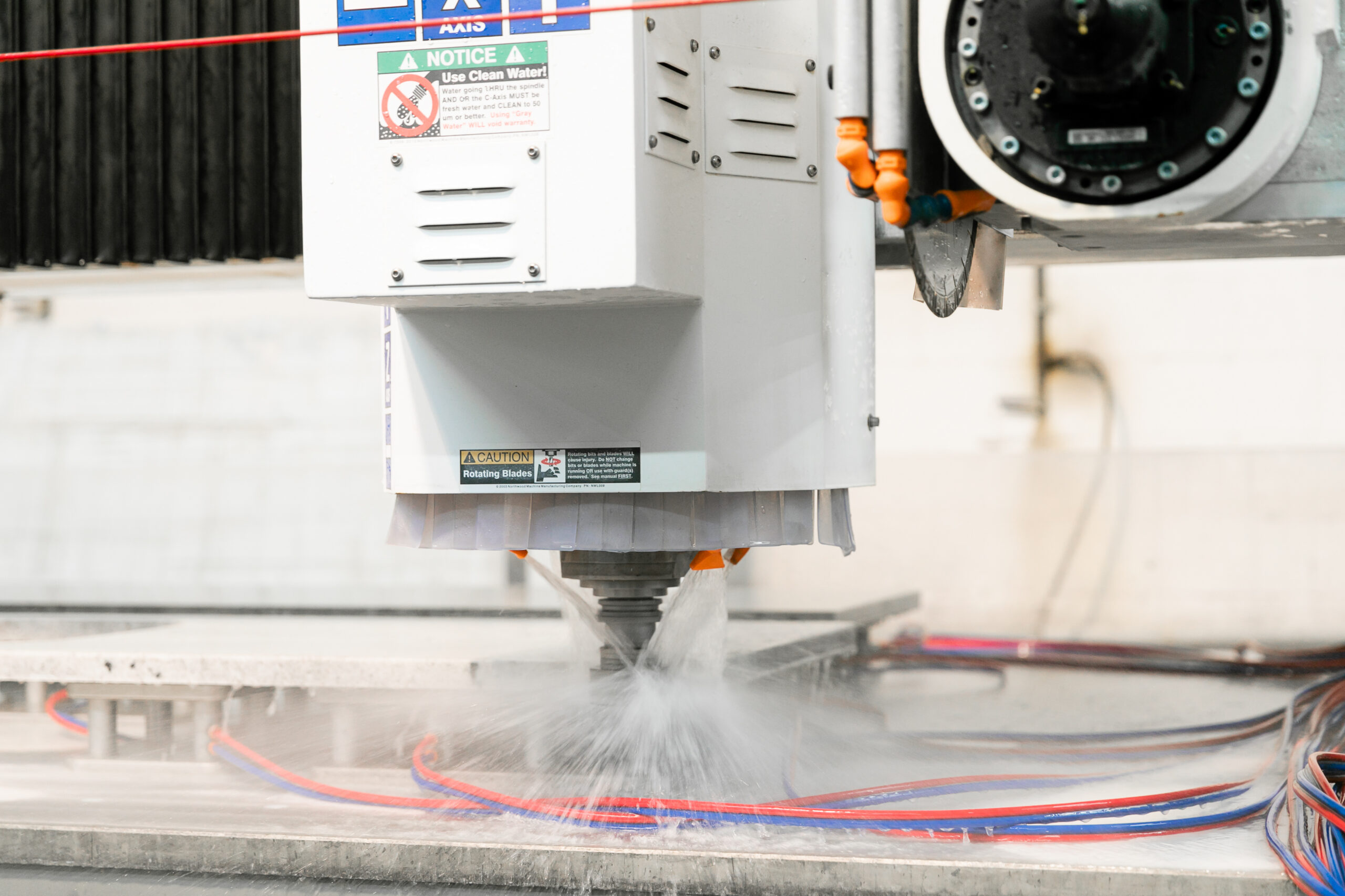
Press a button and the saw automatically moves over to the on‑machine dressing material. The dressing pass on 1/8″ limestone re‑opens the diamonds so they can grind/mill through quartzite cleanly again.
Key advantage: When the tool is dressed, the machine resumes exactly where it stopped. Northwood machines remember the pick‑up point so you don’t lose your place in the program.
Benefits for stone shops:
- Uptime: Get back into the cut without reprogramming.
- Consistency: In‑place dressing means consistent setup and repeatable results.
- Cut quality: Cleaner edges, less chip‑out, more accurate geometry.
- Lower load: Reduced amps/heat vs. pushing a glazed blade.
- Safety: No risky hand‑holding of dressing blocks near a spinning blade.
Before on‑machine dressing (the old way)
- Stop the program mid‑cut.
- Jog out and make a linear move to your dressing material.
- Some operators even hand‑held the dressing block against the blade to “calibrate” (very dangerous).
- Then you had to reprogram or rerun the job and figure out where to continue—hunting for the pick‑up point.
Every one of those steps adds risk and eats production time.
How to know it’s time to dress (shop checklist)
- Visual: the rim looks shiny/polished; sometimes you’ll hear a squeal.
- Electrical: amp draw creeps up compared to your normal baseline on that material/tool.
- Quality: edges start to chip or burn; the cut begins to wander; feed rate falls.
- Feel: the machine feels like it’s pushing instead of cutting.
When you see the signs, run a quick on‑machine dress and resume the program.
Safety note
Avoid hand‑holding any dressing material. Keep hands clear of the blade and let the machine’s on‑board dressing workflow take care of it. It’s faster, repeatable, and far safer.
FAQs
What causes a diamond saw blade to glaze on quartzite?
Dense, hard stone + heat in the cut can polish the bond so the diamonds close up. Without dressing, you’ll see rising amps, slower feeds, and rougher finishes.
Is dressing the same as sharpening?
No. Dressing re‑opens diamond and trues the rim so the blade grinds/mills properly. It’s not like grinding a knife edge.
Why 1/8″ limestone?
It’s an effective dressing medium that opens the diamonds without damaging the segment, restoring consistent bite.
What about my pick‑up point after dressing?
With Northwood, the machine remembers where it left off and continues from that exact position. That’s a big deal for accuracy and throughput.
Do I still need multiple passes on quartzite?
Many shops use multiple passes as a workaround for a glazed blade. With diamonds re‑opened and the rim trued, most will return to normal feeds and fewer passes—machine capability permitting.
SUMMARY
- Problem: Quartzite can glaze the blade → bad cuts, stone movement, binding/trips, misalignment, and lost production.
- Fix: On‑machine saw blade dressing with 1/8″ limestone to re‑open diamonds and restore cut performance.
- Northwood advantage: Push‑button dressing and auto pick‑up—the machine resumes exactly where it stopped.